The Government’s Defence Investment Plan has reignited discussion around the UK’s approach to national security, defence spending and resilience. The recent Sky News discussion on the subject highlights an important question: does the United Kingdom currently invest enough in defence to meet the demands of an increasingly complex security environment?
The publication of the Government’s Defence Investment Plan includes an additional £15 billion in defence funding, with more than £5 billion committed to drones and autonomous systems over the next four years. These investments reflect the Government’s response to evolving threats and its determination to strengthen the UK’s resilience against an increasingly complex security environment.
Beyond the debate surrounding defence spending, the wider discussion highlights a much broader issue. Cyber threats, hostile state activity, geopolitical instability and the protection of Critical National Infrastructure continue to shape the UK’s security priorities and reinforce the importance of preparedness.
Whilst these investments are primarily intended to strengthen national security, they also provide an important reminder for organisations responsible for protecting people, property and business operations across London.
Security Posture in a Changing Security Environment
The security challenges facing organisations today are significantly different from those experienced even a decade ago.
Recent cyber‑attacks affecting major UK organisations, increasing concern surrounding Critical National Infrastructure and growing geopolitical tensions demonstrate that operational resilience should remain a priority for organisations across both the public and private sectors.
However, it is equally important to recognise that security is not solely about cyber threats or advanced technology. Physical security remains fundamental.
Protecting people, buildings and business operations, as well as maintaining operational continuity, depends on experienced professionals working alongside technology, not being replaced by it.
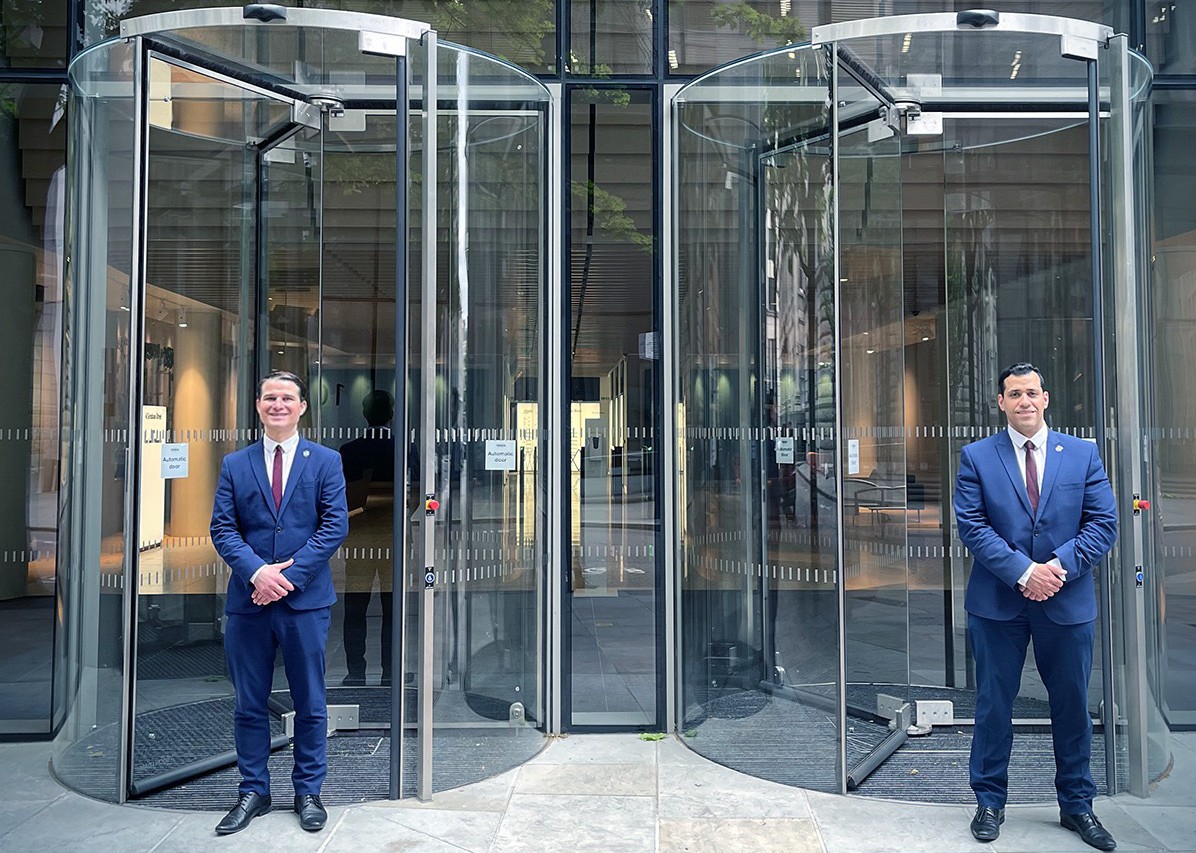
Security posture is therefore critical. It reflects how an organisation presents itself from a security perspective. For example, if an external visitor looks at a site, do they see professional, visible and vigilant security officers, or do they see an environment that appears weak and disengaged? Are there clear access controls, CCTV coverage and structured processes in place, or can individuals move freely without challenge?
A strong security posture sends a clear message: security is taken seriously. Security should no longer be viewed solely as a response to incidents. It should be recognised as an essential part of Business Continuity, operational resilience and effective risk management.
Practical Measures to Strengthen Security Posture Across London Sites
Visible security presence
Ensure security officers are visible, approachable and confident, especially during peak times, events, protests or periods of increased footfall. City of London Police specifically recommends visible security and staff vigilance around business premises. (cityoflondon.police.uk)
Access control discipline
Do not allow tailgating to become normal. Staff, visitors and contractors should be challenged politely but consistently if they do not display valid ID or access credentials.
Reception and front‑of‑house awareness
Reception teams should be trained to identify suspicious behaviour, unusual questioning, hostile reconnaissance, aggressive visitors and individuals attempting to bypass procedures.
Emergency readiness
Ensure all staff understand evacuation, lockdown, fire, bomb-threat and incident escalation procedures. These should be tested regularly, not simply documented.
ACT Awareness training
Encourage staff and security teams to complete ACT Awareness eLearning, which covers identifying vulnerabilities, suspicious behaviour and responding to threats. (cityoflondon.police.uk)
Review physical vulnerabilities
Carry out regular walkthroughs of buildings to identify where unauthorised access, concealment, damage or observation of sensitive operations could occur. NPSA provides useful guidance on protective security. (npsa.gov.uk)
Hostile vehicle mitigation
For buildings with exposed entrances or loading areas, assess whether vehicles could be used to cause harm or gain forced entry, and implement appropriate mitigation measures. (npsa.gov.uk)
Incident reporting culture
Encourage staff to report concerns early, including suspicious behaviour, unusual photography, repeated access attempts or unknown individuals in restricted areas.
Cyber and physical security alignment
Treat cybersecurity and physical security as interconnected. For example, lost access passes, unattended laptops and shared credentials all impact overall security posture.
Regular security reviews
Conduct monthly or quarterly reviews of incidents, near misses, access breaches and training gaps.
Security culture
Security should not be seen as “only the security officer’s job.” A strong security posture depends on all staff being alert, professional and willing to challenge when necessary.
Preparedness Remains Essential
One of the clearest messages emerging from the UK’s Defence Investment Plan is the importance of preparedness. Governments continue to assess emerging threats, strengthen resilience and invest in capabilities designed to reduce vulnerability before incidents occur.
The same principle applies to organisations. Regular Security Risk Assessments, Business Continuity Planning, Emergency Response Procedures and clearly defined operational processes all contribute to protecting people, property and business operations. Preparedness should not begin when an incident occurs. It should already be in place.
The Continuing Importance of Professional Security
The Government’s investment in artificial intelligence, cyber capability and autonomous technologies reflects the changing nature of modern security. While these developments will continue to strengthen operational capability, technology alone cannot replace the judgement, professionalism and experience of highly trained Security Officers.
Every day across London, Security Officers identify suspicious behaviour, respond to incidents, support emergency procedures and help maintain safe, secure and welcoming environments. Technology continues to evolve. Professional security teams remain essential.
How Security Risk Specialists Ltd (SRS) Supports Organisations Across London
At SRS, we recognise that effective security is about far more than responding to incidents. Working alongside organisations across commercial property, residential developments, corporate headquarters and prestigious London buildings provides our team with first‑hand understanding of the operational challenges affecting our clients.
Every client is different. Every site presents different risks. For this reason, every security solution must be tailored to the specific operational environment.
Our management team works closely with clients to carry out comprehensive Security Risk Assessments and develop site‑specific solutions that support both operational resilience and high standards of customer service.
Beyond providing a visible security presence, our Security Officers support access control, contractor management, emergency response, incident management and front‑of‑house services.
What This Means for London Organisations
The discussion surrounding the UK’s Defence Investment Plan is about far more than defence spending. It is a reminder that preparedness, resilience and continuous investment are fundamental to effective security in the capital and the UK as a whole.
Whilst governments strengthen national resilience, organisations must ensure that their own security arrangements continue to evolve in response to a changing environment.
At SRS, we remain committed to protecting people, property and reputation through professional, tailored security solutions. Our mission of “Making London a better city, one welcoming and safe building at a time” continues to guide everything we do.
For full details of our expert Security Services, please visit: Security Company London | Security Risk Specialists or call us on 020 3004 4189.